

In the realm of fasteners, four claw nuts stand out as a unique and versatile option, particularly when it comes to applications in corrosive atmospheres. As a dedicated four claw nut supplier, I've witnessed firsthand the performance and capabilities of these nuts in various challenging environments. In this blog post, I'll delve into how four claw nuts perform in corrosive atmospheres, exploring their design, materials, and real - world applications.
Understanding Four Claw Nuts
Four claw nuts, also known as four - prong nuts, are distinctive fasteners characterized by four protruding claws or prongs. These claws are designed to bite into the material they are attached to, providing a secure and stable connection. The design allows for quick and easy installation, often without the need for additional tools in some cases. They are commonly used in applications where a temporary or semi - permanent connection is required, such as in electrical enclosures, machinery, and automotive components.
Corrosive Atmospheres: A Challenge for Fasteners
Corrosive atmospheres can be extremely harsh on fasteners. Environments with high humidity, exposure to saltwater, chemicals, or industrial pollutants can accelerate the corrosion process. Corrosion not only weakens the fastener over time but can also lead to issues such as loosening, reduced structural integrity, and even complete failure of the connection. When it comes to four claw nuts, the ability to withstand corrosion is crucial for maintaining their performance and reliability.
Materials Used in Four Claw Nuts for Corrosive Atmospheres
The choice of material is a key factor in determining how well four claw nuts perform in corrosive atmospheres. Here are some of the common materials used:
Stainless Steel
Stainless steel is a popular choice for four claw nuts in corrosive environments. It contains chromium, which forms a passive oxide layer on the surface of the nut. This layer acts as a barrier, preventing oxygen and moisture from reaching the underlying metal and thus protecting it from corrosion. Different grades of stainless steel offer varying levels of corrosion resistance. For example, 304 stainless steel is suitable for many general - purpose applications in mildly corrosive atmospheres, while 316 stainless steel, which contains molybdenum, provides enhanced resistance to pitting and crevice corrosion, making it ideal for more aggressive environments such as those near saltwater.
Brass
Brass is another material used for four claw nuts. It has good corrosion resistance, especially in non - acidic and non - marine environments. Brass also offers excellent electrical conductivity, which makes it a suitable choice for applications in the electrical industry. However, in highly corrosive or salt - laden atmospheres, brass may require additional protection, such as a protective coating.
Zinc - Plated Steel
Zinc - plated steel four claw nuts are a cost - effective option. The zinc coating acts as a sacrificial anode, corroding preferentially to the steel beneath. This provides a certain level of protection against corrosion. However, the zinc coating can wear off over time, especially in harsh environments, so these nuts may not be suitable for long - term use in highly corrosive atmospheres.
Performance of Four Claw Nuts in Different Corrosive Atmospheres
Marine Environments
In marine environments, where saltwater and high humidity are prevalent, four claw nuts made of 316 stainless steel are often the best choice. The high level of corrosion resistance of 316 stainless steel helps the nuts withstand the constant exposure to saltwater spray and moisture. The claws of the nut remain intact, ensuring a secure connection even in the face of the corrosive elements. For example, in boat building, four claw nuts are used to secure various components such as electrical panels and small fixtures. The ability of the nuts to resist corrosion is essential to prevent loosening and ensure the safety and functionality of the boat.
Chemical Plants
Chemical plants present a wide range of corrosive atmospheres, depending on the chemicals being handled. Four claw nuts made of materials with high chemical resistance, such as certain grades of stainless steel or specialty alloys, are required. In these environments, the nuts may be exposed to acids, alkalis, and other corrosive substances. The proper selection of material ensures that the nuts can maintain their integrity and performance over time. For instance, in a chemical storage facility, four claw nuts are used to secure equipment and piping. If the nuts were to corrode, it could lead to leaks and potential safety hazards.

Industrial Polluted Areas
Industrial areas with high levels of air pollution, including sulfur dioxide and other pollutants, can also be corrosive to fasteners. Stainless steel four claw nuts are a good option in these areas. The passive oxide layer on the stainless steel surface helps protect the nuts from the corrosive effects of the pollutants. In factories where heavy machinery is used, four claw nuts are used to assemble and secure various parts. Their ability to resist corrosion in the polluted atmosphere ensures the smooth operation of the machinery.
Comparison with Other Shaped Nuts
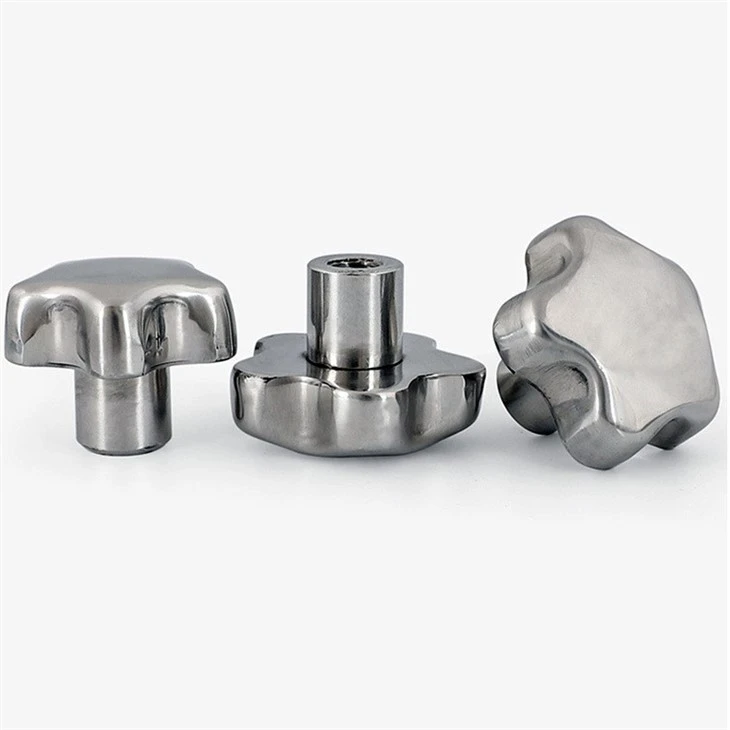
When considering fasteners for corrosive atmospheres, it's also useful to compare four claw nuts with other shaped nuts. For example, K Nuts are often used in applications where a quick - release connection is required. While they may have their own advantages, four claw nuts generally offer better grip and stability in many cases. Stainless Steel Jack Nut is another type of nut. It is designed for applications where a high - strength connection is needed. Four claw nuts, on the other hand, are more suitable for applications where a semi - permanent or easily adjustable connection is required. Star Knob Nuts are often used for hand - tightened applications. Four claw nuts, with their claw design, can provide a more secure connection in corrosive atmospheres compared to star knob nuts, especially when vibration is present.
Real - World Case Studies
Let's take a look at some real - world examples of how four claw nuts have performed in corrosive atmospheres.
Case Study 1: Coastal Bridge Lighting
A coastal bridge project required the installation of lighting fixtures. Four claw nuts made of 316 stainless steel were used to secure the fixtures to the bridge structure. After several years of exposure to the marine environment, including salt spray and high humidity, the nuts showed minimal signs of corrosion. The claws remained firmly attached to the structure, and the lighting fixtures were still securely in place. This demonstrated the effectiveness of 316 stainless steel four claw nuts in a highly corrosive coastal environment.
Case Study 2: Food Processing Plant
In a food processing plant, where the atmosphere is often humid and may contain traces of acids and alkalis from cleaning agents, four claw nuts made of food - grade stainless steel were used to secure equipment. Over time, the nuts maintained their integrity and did not corrode. This was important for ensuring the hygiene and safety of the food processing environment, as corroded nuts could potentially contaminate the food products.
Conclusion
In conclusion, four claw nuts can perform well in corrosive atmospheres when the right material is selected. Stainless steel, brass, and zinc - plated steel are some of the common materials used, each with its own advantages and limitations. Their unique design, with the four claws providing a secure connection, makes them a versatile option for various applications in corrosive environments. Whether it's in marine, chemical, or industrial settings, four claw nuts can play an important role in maintaining the integrity of connections.
If you are in need of high - quality four claw nuts for your projects in corrosive atmospheres, I invite you to contact me for procurement and further discussions. I can provide you with detailed information about the different materials, sizes, and specifications of four claw nuts to meet your specific requirements.
References
- ASM Handbook Volume 13A: Corrosion: Fundamentals, Testing, and Protection. ASM International.
- Machinery's Handbook, 31st Edition. Industrial Press.
- Corrosion Resistance of Metals and Alloys, Second Edition. L. L. Shreir, R. A. Jarman, and G. T. Burstein.