

Hey there! As a solid rivet supplier, I often get asked about the minimum thickness of materials that can be joined with solid rivets. It's a crucial question, especially for those in the manufacturing, construction, and DIY industries. So, let's dive right into it.
First off, what are solid rivets? Solid rivets are one of the oldest and most reliable methods of joining materials. They're basically a metal pin that's inserted through holes in the materials to be joined. Once in place, the end of the rivet is hammered or pressed to form a second head, clamping the materials together. They're known for their strength and durability, making them a popular choice in a wide range of applications.
Now, back to the main question: what's the minimum thickness of materials that can be joined with solid rivets? Well, it depends on a few factors.
Factors Affecting the Minimum Material Thickness
Rivet Size
The size of the rivet plays a big role. Smaller rivets, like those with a diameter of 1/16 inch or 3/32 inch, can be used with relatively thin materials. For example, a 1/16 - inch diameter solid rivet can typically be used to join materials as thin as 0.010 inches. On the other hand, larger rivets, such as those with a 1/4 - inch diameter, require thicker materials. A general rule of thumb is that the total thickness of the materials being joined should be at least 1.5 times the diameter of the rivet. So, for a 1/4 - inch (0.25 inches) diameter rivet, the minimum combined thickness of the materials would be around 0.375 inches.
Material Type
The type of material also matters. Different materials have different properties, such as strength, ductility, and hardness. For instance, soft materials like aluminum or copper can be joined with solid rivets using thinner sections compared to harder materials like steel. Aluminum is more malleable, so it can better withstand the deformation that occurs during the riveting process. You might be able to use thinner aluminum sheets with a particular rivet size than you could with steel sheets.
Application Requirements
The intended application of the joined materials is another factor. If the joint will be subjected to high stress, vibration, or other harsh conditions, you'll need to use thicker materials and larger rivets to ensure a strong and reliable connection. For example, in an aircraft structure, where safety is of utmost importance, the materials and rivets used are carefully selected to meet strict standards. The minimum thickness of the materials in such applications is often much greater than in a simple DIY project.
Examples of Minimum Thickness for Different Applications
Automotive Industry
In the automotive industry, solid rivets are used in various components. For interior trim pieces, where the loads are relatively low, thin materials can be joined. You might see 0.020 - 0.030 - inch thick aluminum or plastic parts being joined with small solid rivets. However, for structural components like chassis parts, the materials are much thicker. Steel sheets with a thickness of 0.060 inches or more might be used, along with appropriately sized solid rivets.

Electronics
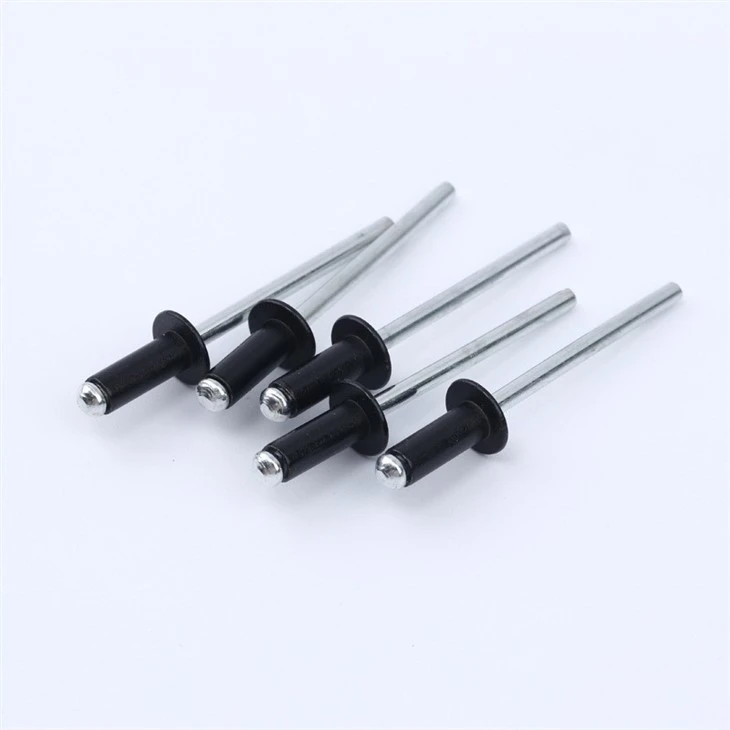
In electronics, solid rivets are sometimes used to assemble enclosures or mount components. For plastic enclosures, Plastic Pop Rivets can be used to join thin plastic sheets. The minimum thickness of these plastic sheets could be around 0.015 - 0.025 inches, depending on the size of the rivet. For metal enclosures, such as those made of aluminum, the minimum thickness might be slightly higher, around 0.020 - 0.035 inches.
Construction
In construction, solid rivets are used in steel structures. For light - gauge steel framing, which is often used in non - load - bearing partitions, the steel sheets can be as thin as 0.018 inches. However, for load - bearing structures, the minimum thickness of the steel members is much greater, typically starting from 0.125 inches or more, and larger solid rivets are used to ensure a strong connection.
How to Determine the Right Rivet and Material Thickness
If you're not sure what size of solid rivet to use and what the minimum material thickness should be for your project, here are some steps you can take:
- Understand the Load Requirements: Determine the amount of stress, shear, and tension the joint will be subjected to. This will help you decide on the strength of the rivet and the thickness of the materials.
- Refer to Standards and Guidelines: Many industries have standards and guidelines for riveting. For example, the aerospace industry follows strict standards set by organizations like the Federal Aviation Administration (FAA). These standards can provide valuable information on the appropriate rivet size and material thickness.
- Test and Experiment: If possible, conduct some tests on sample materials using different rivet sizes. This will give you a better understanding of how the rivets perform and what the minimum thickness can be for a reliable joint.
As a solid rivet supplier, I offer a wide range of Solid Rivets, including Black Pop Rivets that are not only strong but also aesthetically pleasing. Whether you're working on a small DIY project or a large - scale industrial application, I can help you find the right rivets for your needs.
If you're interested in purchasing solid rivets or have any questions about the minimum material thickness for your specific project, feel free to reach out. I'm here to assist you in making the right choices and ensuring that your joints are strong and reliable.
References
- Machinery's Handbook, 31st Edition. This comprehensive reference book provides detailed information on manufacturing processes, including riveting.
- Aircraft Riveting Manuals. These manuals, often provided by aircraft manufacturers, contain specific guidelines on rivet selection and material thickness for aerospace applications.
- Industry - specific standards and codes, such as those from the American Society of Mechanical Engineers (ASME) and the American Welding Society (AWS), which offer valuable information on riveting practices.